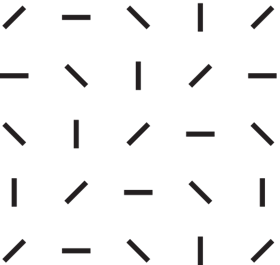


«See You»
Interactive Installations
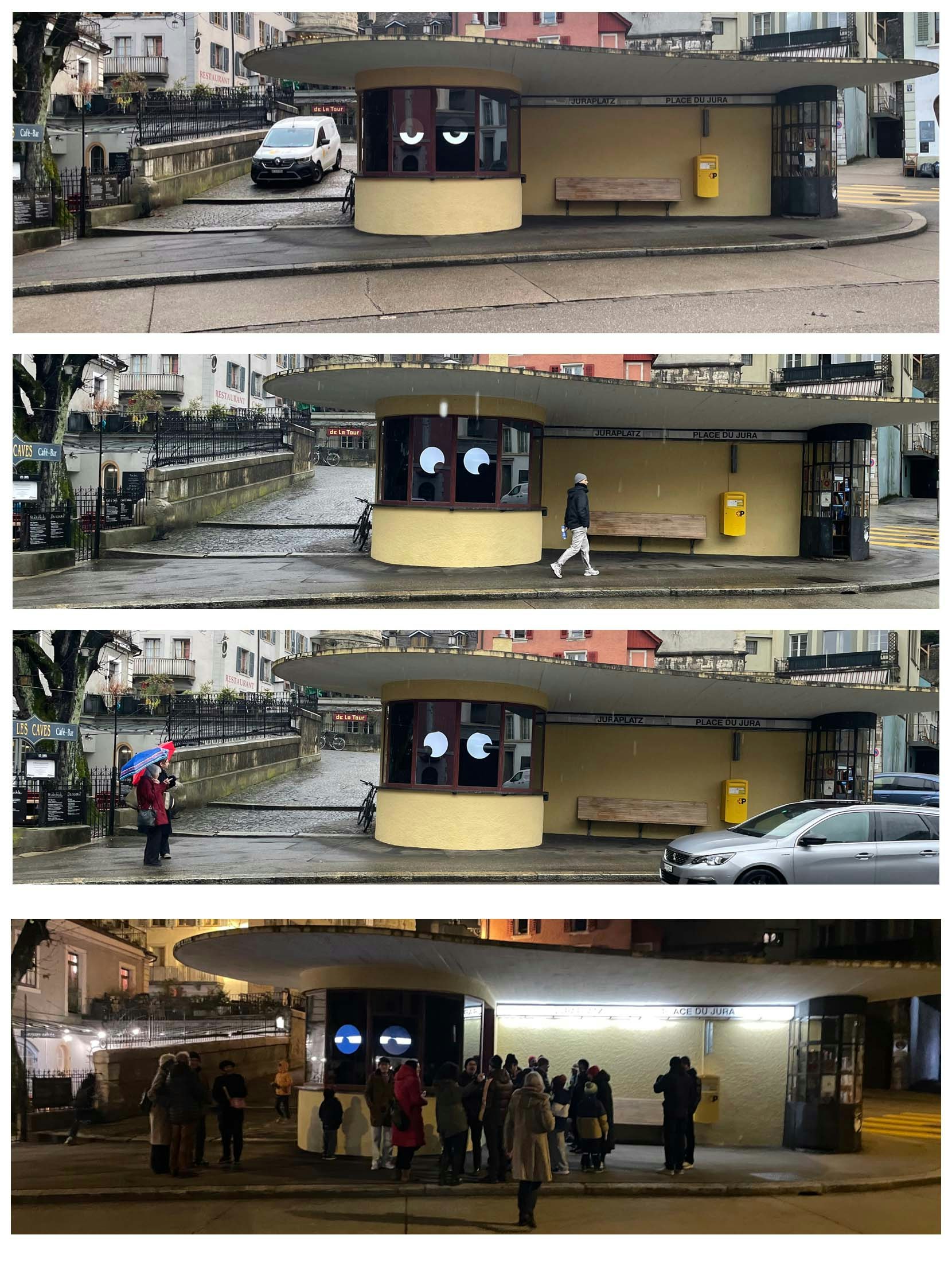
Two oversized eyes appear in the pavilion windows. They follow you as you pass by. They blink. They get tired or curious. They react to every movement.
Something between encounter and surveillance.
Between «Finally, someone sees me!» and «What does this thing know about me?»
Do you want to be seen?
We post stories so someone will look. We walk through the city hoping to be noticed. We crave attention, recognition, a moment of connection.
At the same time, we know: cameras everywhere. Algorithms analyzing how we walk, what we buy, where we stop. We're constantly observed – yet still feel invisible.
«See You» makes this ambivalence visible.
The pavilion becomes a counterpart. It perceives you. But what does that mean? Is it attention or control? Encounter or data collection? Playful or unsettling?
The answer lies in how you feel when the eyes look at you.
But «See You» does more than watch back.
It makes technology tangible. It opens a conversation about systems that increasingly shape our everyday lives. The eyes are cute, almost empathetic – but they're still just a system. Sensors. Code. Data.
That's exactly the point.
By being approachable, almost adorable, the installation invites us to engage with questions we often avoid: What does it mean when such systems become normal? When do we stop noticing them? Where does the line between connection and surveillance blur?
«See You» doesn't provide answers. It creates space for the questions – without fear, without preaching. Just a pavilion that looks at you, and suddenly you're thinking about what it means to be seen.
How it works
No One:
The eyes fall asleep.
Alone:
An attentive, almost tender gaze follows you. The eyes accompany your path, blink, become curious. You are seen.
In pairs:
The pavilion squints. Each eye fixates on a different person. Divided attention. Who gets more? The installation can't decide.
In groups:
Total overload. The eyes jump frantically back and forth, become nervous, irritated. Too many faces. Too many stories. The system collapses, just like we do when too much comes at us.
At night:
After dusk, the installation reveals its full impact. The illuminated eyes gaze from wintry Biel into the night. The window panes become screens and mirrors at once, digital gazes meet analog reflections of the city.
Post-Camera Surveillance
«See You» uses no cameras. No video. No facial recognition. No data storage.
Instead: LIDAR technology, a laser scanner that only detects movement and position. People become anonymous points in space. The installation doesn't know who you are. It only knows that you're there.
A form of surveillance that doesn't identify. A gaze that stores nothing. An attention that stays in the moment.
Technical Details
Hardware:
- LIDAR sensor: RPLiDAR S2E (905nm infrared laser)
- Samsung Professional Displays (43")
- Detection range: up to 30m
- Scan rate: 32,000 measurements/second
Software:
- Real-time processing in TouchDesigner
- Person detection & clustering
- Adaptive behavioral modes based on number and movement of people
- Smooth eye movement interpolation
Interaction principle:
The system detects position and movement of people, classifies the situation (1 person / 2 people / 3+ people) and reacts with different gaze behaviors – from focused and attentive to overwhelmed and nervous.
License for Exhibitions & Festivals
«See You» is available for licensing to festivals, galleries, and public art programs worldwide.
- Public art festivals and programs
- Contemporary art venues
- Architecture and media art contexts
- Urban interventions
Permanent Installation
For collectors, institutions, and public spaces seeking a lasting presence, «See You» is available as a complete, custom-configured installation. Each permanent setup includes:
- Tracking System (Camera or Lidar)
- 1 or 2 professional displays
- TouchDesigner software with site-specific behavioral programming
- Full technical documentation and remote support
- Permanent installations can be tailored to specific architectural contexts and audience behaviors.
For inquiries about licensing, permanent installations, technical requirements, and pricing:
info@cyrilgfeller.com
Press & Media
Bericht im Tele Bärn
https://www.telebaern.tv/telebaern-news/riesenaugen-auf-dem-juraplatz-in-biel-wer-vorbeigeht-wird-beobachtet-163215124
Bericht im Bieler Tagblatt
https://ajour.ch/de/story/651308/härzig-oder-bedrohlich-kunstinstallation-auf-dem-juraplatz
Artikel auf warum Architektur
https://warum-architektur.at/artikel/schau-mir-in-die-augen-kleines/
Credits
«See You» — An installation by Cyril Gfeller
Concept, code, realization: Cyril Gfeller
Supported by: the Town of Biel Bienne, Swisslos – Kultur Kanton Bern & Artspace Juraplatz, Biel/Bienne


© 2026 Cyril Gfeller
cyrilgfeller.com
January 23 – February 12, 2026
Artspace Juraplatz, Juravorstadt 2A, 2502 Biel/Bienne